
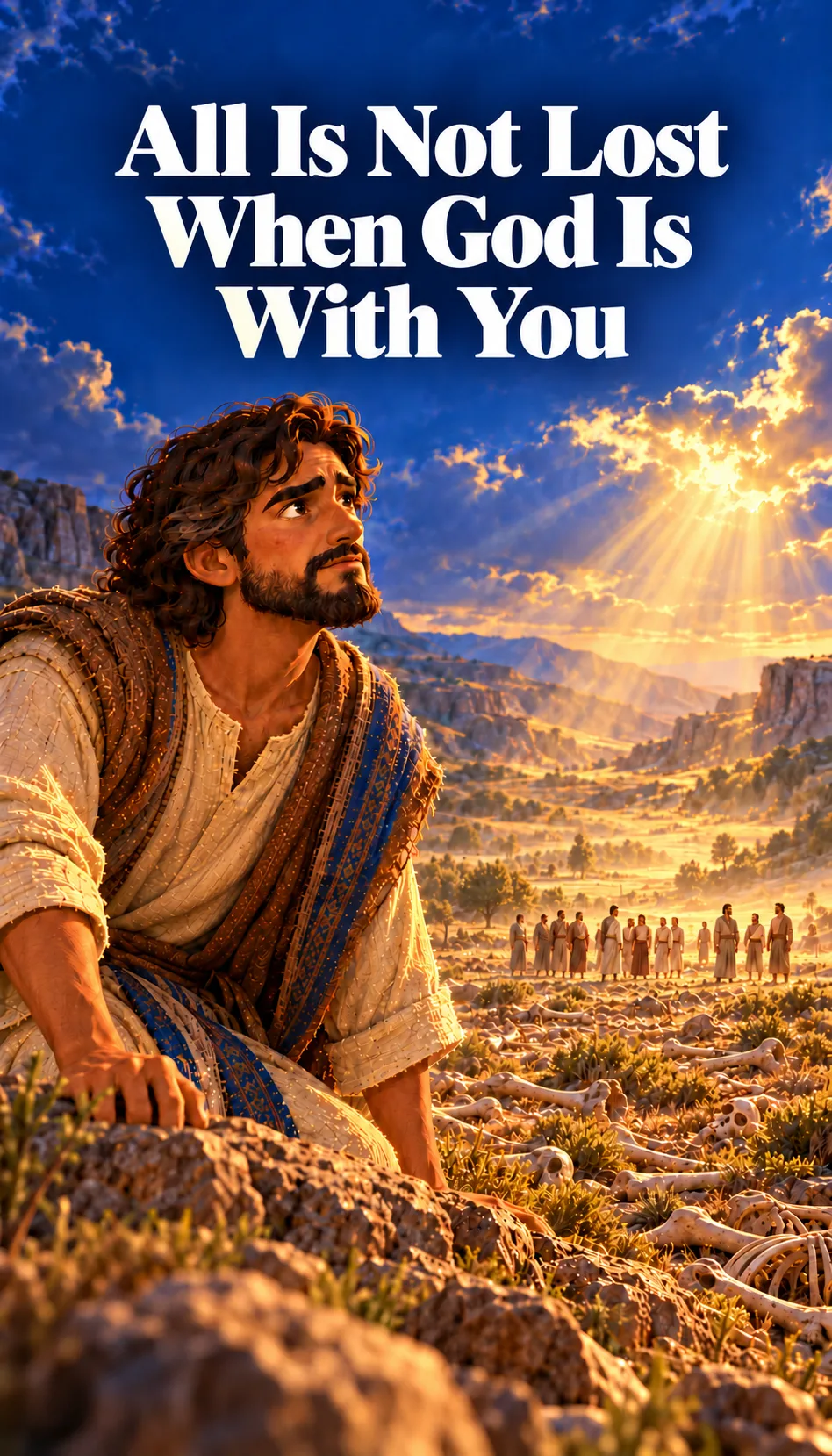
Not all is lost when God is with you
7 min read
In the vision of the valley of dry bones, God showed Ezekiel His promise to restore Israel. A story to discuss with family about hope and trust in His word.
Read storyEzekiel saw in a vision a river flowing from the temple that brought life wherever it went. This passage invites us to trust in God's restorative power.
Explore more biblical characters or continue with a related Bible class.
Meet more Bible characters and discover what their stories teach us.
7 min read
In the vision of the valley of dry bones, God showed Ezekiel His promise to restore Israel. A story to discuss with family about hope and trust in His word.
Read story
17 min read
Ezekiel saw in a vision the glory of God departing from the temple. His story invites us to return to the Lord with a sincere heart and reminds us of His promise of restoration.
Read story
21 min read
Ezekiel, exiled by the Kebar River, saw the likeness of the glory of God and fell face down on the ground. His encounter encourages us to seek God and listen to His voice even far from home.
Read story
11 min read
God called Ezekiel to warn Israel as a watchman. His mission teaches us to care for others with truth, humility, and love.
Read story
14 min read
God called Ezekiel while he lived among the exiles by the Chebar River. His story encourages us to listen to and share God's word even in difficult times.
Read story
22 min read
God asked Ezekiel to eat a scroll before speaking to Israel. Discover why it was sweet as honey and how to receive His Word as a family.
Read storyCan you imagine a river capable of bringing life to places where it seemed impossible for anything to grow?
InEzekiel 47:1-12, the Bible recounts an extraordinary vision: a river flowing from the temple of God, increasing in depth and bringing healing and abundance as it went.
This story of the prophet Ezekiel reminds us thatGod is the source of life, hope, and restoration, even when we go through difficult times.
Ezekiel was a priest and prophet of the Old Testament who lived during the exile of the people of Israel in Babylon, around the 6th century BC.
God called him while he was among the exiles by the Kebar River (Ezekiel 1:1-3).
His mission was to communicate God's messages, warn about the consequences of sin, and announce promises of restoration for Israel.
Among his most well-known visions are the valley of dry bones, the promise of a new heart, and the river flowing from the temple.
In a vision, God showed Ezekiel a temple from which water flowed toward the east.
A man who was guiding him began to measure distances as he led him along that stream.
First, the water reached his ankles.
Then, up to his knees.
Further on, up to his waist.
Finally, the water became a river so deep that he could no longer cross it by walking. It was necessary to swim!
What had started as a small stream was now a mighty river.
Ezekiel 47:6-10
The vision continued with something even more astonishing.
The river reached the sea, traditionally identified as the Dead Sea, and its waters were healed.
Where that stream reached, numerous fish appeared and life abounded.
Fishermen cast their nets and the landscape was filled with activity.
The passage also clarifies that some swampy areas would be designated as salt flats (Ezekiel 47:11). Therefore, the vision does not literally state that all the waters were healed.
Ezekiel 47:12
On both sides of the river, fruit trees grew.
Their leaves did not wither, they produced fruit regularly, and their leaves were used for medicine.
The reason for that abundance was that they received the waters flowing from the sanctuary.
The message was extraordinary: God was showing His people a vision of life and restoration amid a story marked by exile and suffering.
His calling as a prophet (Ezekiel 1–3):God chose him to communicate His word to the people of Israel during the exile.
The promise of a new heart (Ezekiel 36:26-27):he announced that God would spiritually transform His people.
The valley of dry bones (Ezekiel 37:1-14):he saw a vision representing the restoration of Israel.
The river that brought life (Ezekiel 47:1-12):he received a vision of abundance, healing, and hope coming from God.
Israel was going through the pain of exile, but God announced that He still had promises of restoration for His people.
Application:When our family faces difficulties, we can turn to God in prayer and seek His guidance without losing hope.
The river Ezekiel saw flowed from the sanctuary, linking that image of life with the presence of God.
Application:Just as our body needs water, our spiritual life needs to be nourished through prayer, Bible reading, and a close relationship with the Lord.
In the vision, the river's waters transformed places that seemed incapable of sustaining abundant life.
Application:We can trust God in the face of family conflicts, sadness, or difficulties, while seeking solutions and taking steps toward reconciliation.
This does not mean that all problems will disappear immediately, but that our hope is placed in a powerful and faithful God.
The trees by the river provided food because they received water from the sanctuary.
This image invites us to reflect on the fruits of our relationship with God.
Application:We can show our faith through love, generosity, forgiveness, and service to others.
The Bible does not highlight specific personal mistakes of Ezekiel in this story, but it does present significant challenges in his life.
He lived far from his land, communicated difficult messages to a people who often did not want to listen, and experienced the loss of his wife (Ezekiel 24:15-24).
Despite these circumstances, he continued carrying out his prophetic mission.
His story teaches us thatfollowing God does not mean being free from suffering, but learning to remain faithful amid difficulties.
For children:When they feel sad or worried, they can talk to God and remember that He hears their prayers.
For parents:Spending a few minutes a day reading the Bible and praying together can strengthen family faith.
For teenagers:Ezekiel's story teaches that difficult circumstances do not have to make us lose hope.
For families:We can seek the restoration of our relationships by learning to ask for forgiveness, listen, and treat others with love.
For teachers:The vision of the river is an excellent opportunity to teach about hope and God's promises through drawings and biblical activities.
Ezekiel was a prophet who listened to God's messages and communicated them to the people.
One day, God showed him a wonderful vision.
He saw water flowing out of the temple. At first, it was shallow, but the further it went, the deeper it became.
At first, it reached his ankles, then his knees, then his waist, and finally it became a river so deep that he would have to swim to cross it.
But that was not all!
The water reached the sea and brought life. There were many fish and trees full of fruit.
With this vision, God was showing a beautiful promise of restoration.
What can we learn?
That God is our source of hope and that we can trust Him even when things seem difficult.
Ezekiel 1:3:God calls Ezekiel to be a prophet.
Ezekiel 36:26:God promises to give His people a new heart.
Ezekiel 37:14:God announces life and restoration through His Spirit.
Ezekiel 47:5:The river becomes so deep that it cannot be crossed on foot.
Ezekiel 47:9:The waters of the river bring life and healing.
Ezekiel 47:12:The trees produce fruit and their leaves serve as medicine.
Who was Ezekiel and what mission did he receive from God?
Where did the water of the river he saw come from?
What happened as Ezekiel advanced through the water?
What happened when the river reached the sea?
What does this vision teach us about the power of God?
What situation in our family needs prayer and hope?
“Where God brings His life, hope can bloom again.”
Beloved Lord, thank you because You are our source of life and hope.
Just as You showed Ezekiel a river that brought restoration, help us to trust in Your promises.
Renew our hearts, strengthen our family, and teach us to live with love, faith, and hope.
May our words and actions reflect Your goodness every day.
In Jesus' name, amen.
The story ofEzekiel in the Biblereminds us that God had not forgotten His people, even when they were going through times of suffering.
The vision of the river flowing from the temple announced life, abundance, and restoration.
Today we can learn from this message and approach God with confidence, remembering that He remains our source of hope.
InLittle ones of the Kingdom, we invite you to continue discovering biblical stories that strengthen your faith and that of your entire family.
Ezekiel was a priest and prophet of the Old Testament who lived during the exile of Israel in Babylon. God called him to announce messages of warning and restoration to His people.
The river is part of a prophetic vision of restoration. Its waters, coming from the sanctuary, bring life and healing. The image highlights God's power to renew and bless His people.
It is found in Ezekiel 47:1-12. The passage describes the river flowing from the temple, increasing in depth and bringing life along its path, along with trees that bear fruit.
In John 7:37-39, Jesus speaks of living water, which the evangelist relates to the Holy Spirit. Although this passage and Ezekiel 47 have different contexts, both invite reflection on the life that comes from God.
It teaches that God is faithful, powerful, and a source of hope. Children can learn to trust Him, seek Him in prayer, and show His love through good deeds.