Ezekiel saw in a vision the glory of God departing from the temple. His story invites us to return to the Lord with a sincere heart and reminds us of His…
Ezekiel was one of the great prophets of the Old Testament. God called him at a particularly difficult time: the people of Judah had begun to suffer exile in Babylon, Jerusalem was in crisis, and many people had spiritually turned away from the Lord.
Among the most striking experiences ofEzekiel in the Bibleis a vision in which he saw the glory of God leaving the temple of Jerusalem. It was a sad and solemn scene: the place that was meant to represent worship, obedience, and communion with God had been defiled by sin and idolatry.
However, Ezekiel's story does not end with judgment and sadness. His book also contains calls to repentance, promises of restoration, the well-known vision of the dry bones, and finally, a vision of the glory of God returning.
His life reminds us of a fundamental truth:God does not seek only a religious appearance; He desires a heart that loves Him, listens to Him, and walks in obedience.
Who was Ezekiel in the Bible?
Ezekiel was a priest and prophet of Godwho lived during the 6th century BC, in one of the most difficult periods in the history of Judah.
The Bible presents him asEzekiel son of BuziHe was part of the group of Jews who had been taken captive to Babylon after King Jehoiachin's deportation.
His story is mainly found in thebook of Ezekiel, which has 48 chapters.
While other prophets spoke from Jerusalem, Ezekiel carried out much of his ministry among the exiles. There God called him to deliver messages of warning, judgment, repentance, and hope.
Ezekiel received numerous visions and performed symbolic actions that communicated what God wanted to say to His people.
His mission was not easy. He had to speak to people who often did not want to listen.
Even so, Ezekiel continued proclaiming the message God had entrusted to him.
The story of Ezekiel
God calls Ezekiel in the midst of exile
The story begins by the river or canal Chebar, in Babylon.
Ezekiel was among the exiles when he received an extraordinary vision of the glory of God.
The first lesson appears from the beginning: although the people were far from Jerusalem,God was not confined to the temple.
The Lord could meet His children even in foreign territory.
In the midst of exile, God called Ezekiel to be a prophet.
His task would be difficult. God warned him that the people might be rebellious and refuse to listen.
But Ezekiel's responsibility was not to ensure that everyone accepted the message. His responsibility wasto be faithful to the message God had given him.
Ezekiel becomes a watchman
God used a very powerful image to describe the prophet's responsibility: Ezekiel would be like awatchman.
In ancient times, a watchman observed from a high position to warn when danger was approaching.
Similarly, Ezekiel had to warn the people about the consequences of continuing to turn away from God.
This responsibility appears especially in Ezekiel 3 and is emphasized again in Ezekiel 33.
The prophet had to speak the truth, even if the message was uncomfortable.
Ezekiel conveys warnings through signs.
Part of Ezekiel's ministry was very visual.
God asked him to perform different symbolic actions to communicate messages to the people. These signs showed the seriousness of what was happening and warned about the judgment that would come upon Jerusalem.
They were not mere creative representations.
Each action sought to draw the attention of a people who had become accustomed to hearing warnings without responding to them.
Ezekiel contemplates what was happening in the temple.
One of the most serious moments in the book begins in Ezekiel 8.
In a vision, God shows the prophet different sinful practices related to Jerusalem and the temple.
The temple was meant to be a place dedicated to the Lord.
However, while the religious structure continued to exist externally, internally the people had been drifting away from God.
This situation sets the stage for one of the most painful moments in the entire book.
Ezekiel sees the glory of God depart from the temple.
In Ezekiel 10 and 11, the prophet witnesses how the glory of God begins to leave the temple.
The scene unfolds progressively.
The glory of the Lord moves from the temple to the entrance, then to the eastern gate, and finally rises above the hill located to the east of the city.
The vision conveyed a very serious message:the sin of the people had real consequences.
For years there had been warnings, but many had become accustomed to maintaining religious practices while their hearts remained far from God.
The problem was not simply that they had made mistakes.
They had allowed idolatry and disobedience to take a place that belonged to the Lord.
That is why this scene is so striking.
The people could still look at the temple building and think that everything was fine.
But having a temple did not automatically mean walking close to God.
Ezekiel's vision teaches us thatspiritual appearance can never replace a sincere and obedient relationship with the Lord.
God promises to give a new heart
Ezekiel's message was not only one of judgment.
God also began to speak of restoration.
In Ezekiel 36 appears one of the most beautiful promises in the book: God speaks of cleansing his people, giving thema new heartand putting a new spirit within them.
Israel's problem could not be solved merely by changing external circumstances.
They needed an inner transformation.
The valley of dry bones
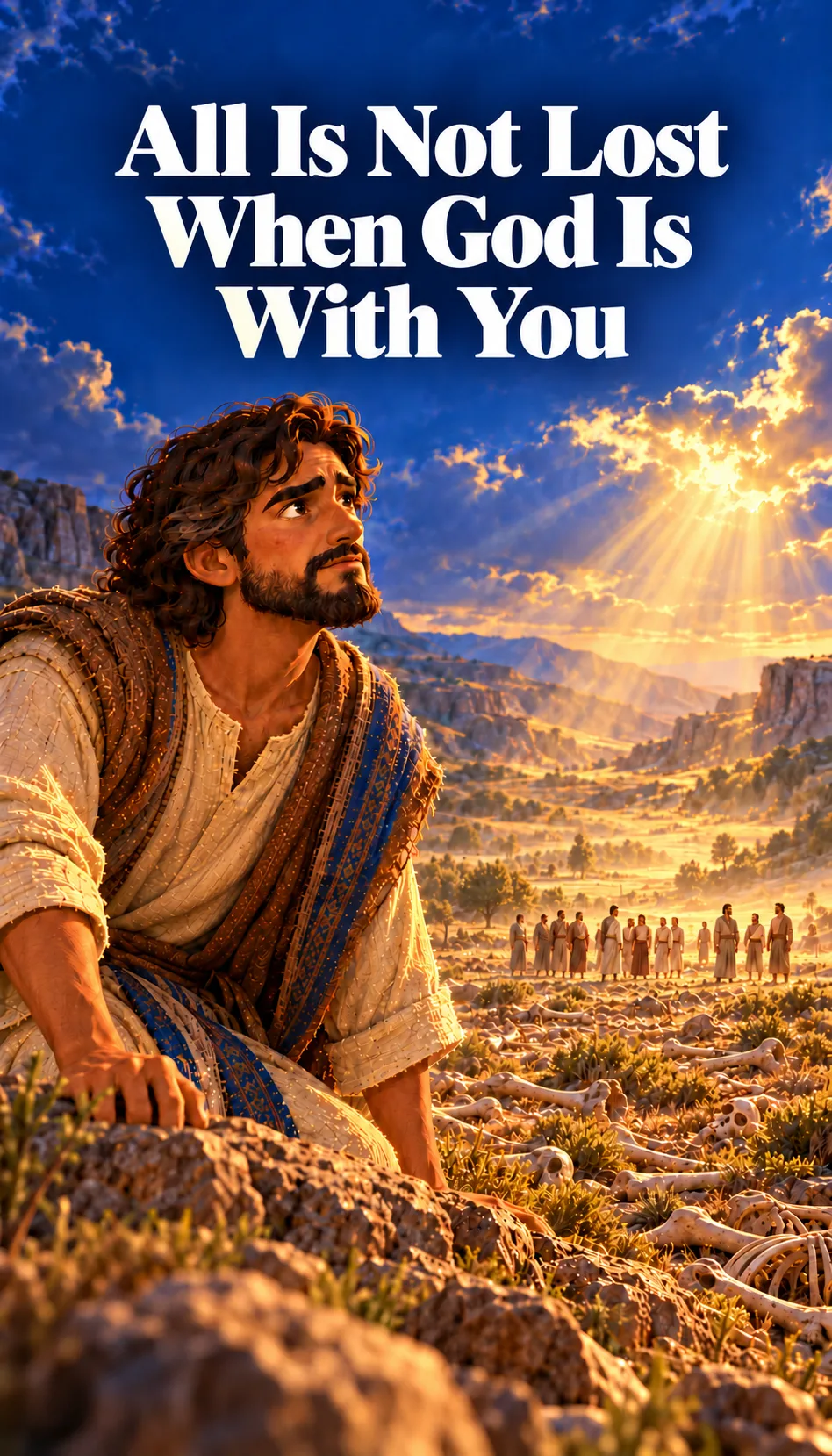
In Ezekiel 37 we find probably the prophet's most well-known vision.
Ezekiel sees a valley full of completely dry bones.
Humanly, it seemed impossible for life to arise there.
But God asks the prophet if those bones could live.
Then Ezekiel witnesses how the bones begin to come together, receive tendons, flesh, and skin. Finally, they receive breath and stand up.
The vision communicated hope to the exiled people.
Although Israel felt defeated and without a future,God could still restore it..
Where people only saw death, God could produce life.
Ezekiel contemplates the return of the glory of God.
Here appears a beautiful contrast with the sad vision of chapters 10 and 11.
The glory that Ezekiel had seen departing appears again inEzekiel 43,when the prophet receives a vision related to restoration.
The story, therefore, does not end with God departing.
It ends by showing hope.
The same book that seriously denounces sin also presents a God who calls for repentance and announces restoration.
Most important moments in Ezekiel's life
The calling of Ezekiel — Ezekiel 1–3.God reveals Himself to the prophet during the exile and calls him to speak to Israel.
His mission as a watchman — Ezekiel 3:16-21.God teaches him that he must faithfully warn the people about the consequences of turning away from Him.
The signs and warnings about Jerusalem — Ezekiel 4–7.Ezekiel uses different symbolic actions to show the seriousness of the approaching judgment.
The vision of sin in Jerusalem — Ezekiel 8–9.God shows the prophet the gravity of the existing spiritual corruption.
The glory of God departs from the temple — Ezekiel 10–11.It is one of the most solemn events in the book and shows the consequences of persisting in sin.
The valley of dry bones — Ezekiel 37.God shows that He can still bring restoration when humanly everything seems lost.
The glory of God returns — Ezekiel 43.The book leads again toward hope and the restoration of God's presence among His people.
What can we learn from Ezekiel?
1. We can seek God even in difficult circumstances
Ezekiel received his call while he was in exile.
He was not living a comfortable stage nor surrounded by the conditions he probably would have desired.
However, God met him there.
Biblical principle:our circumstances do not prevent God from continuing to work.
Application for our life:When our family goes through changes, losses, moves, or difficult times, we can continue seeking the Lord. God is not limited by our location or our circumstances.
2. Religious appearance does not replace a heart close to God
The people had a temple, ceremonies, and a religious history.
But that did not guarantee that they were living in obedience.
Precisely for that reason, the vision of the glory departing from the temple is so striking.
Application for our life:We can attend church, know Christian songs, and learn biblical stories, but we must also ask ourselves how our heart stands before God.
3. Sin must not become something normal
One of the tragedies presented in the book of Ezekiel is that the people had persisted for a long time in practices that displeased God.
Sin had ceased to cause alarm.
Biblical principle:God is holy and desires that His people also live apart from sin.
Application for our life:When we recognize something wrong, we must bring it before God, repent, and change direction, instead of getting used to it.
4. We must speak the truth with love and faithfulness.
Ezekiel's task as a watchman was not easy.
He had to deliver messages that many people did not want to hear.
However, God had entrusted him with a responsibility.
Biblical principle:Loving someone also means being willing to warn them when they are taking a dangerous path.
Application for our life:Parents, teachers, and Christian leaders must teach biblical truth with love, patience, and courage.
5. God can bring life where we only see defeat
The valley of dry bones seemed completely lost.
But God showed Ezekiel that He could restore what humanly seemed impossible.
Biblical principle:No situation is beyond God's power.
Application for our life:We can continue praying for people, families, and difficult situations even when we do not yet see a solution.
6. God's desire includes restoring His people
Ezekiel begins by contemplating the glory of God and later sees it departing from the temple.
However, the book does not end there.
In Ezekiel 43, the glory of the Lord appears again.
Biblical principle:God's judgment is serious, but the Bible also reveals His desire for restoration.
Application for our life:When we have turned away from God, we must respond to His call, repent, and seek Him again.
The challenges Ezekiel faced
The Bible does not present major personal sins of Ezekiel around which his story is built. Therefore, it would be incorrect to invent mistakes that the biblical text does not clearly record.
Instead, we can observe enormous challenges.
Ezekiel had to minister among a rebellious people.
He had to communicate difficult messages.
He lived as an exile far from Jerusalem.
He witnessed through visions announcements of judgment on the city and the temple.
He also had to remain faithful even when probably many did not want to hear his message.
His story shows thatobeying God does not always mean receiving an easy task.
Sometimes faithfulness requires perseverance, courage, and trust.
How can we apply the story of Ezekiel today?
For children:learn that following God means loving Him not only with words but also with our decisions.
For parents:teach faith by example. Children need to see that our relationship with God exists beyond church meetings.
For families:set aside moments to pray, read the Bible, and sincerely talk about how we are walking with God.
For teachers and leaders:teach both God's love and the importance of obedience and repentance, without turning the biblical message into just nice stories.
For our daily life:examine if there is any habit, attitude, or sin we are getting used to and bring it before God.
For those going through difficulties:remember the valley of dry bones. A situation that seems finished to us can still be under God's restoring power.
Ezekiel explained for children
Ezekiel was a man who loved God and was called to be a prophet.
He lived far from Jerusalem because he and other Israelites had been taken to Babylon.
God showed him different visions to teach him important messages.
In one of them, Ezekiel saw something very sad:the glory of God was leaving the templebecause the people had turned away from the Lord and had allowed things that did not please God.
But God also taught him something full of hope.
In another vision, Ezekiel saw a valley full of dry bones that came back to life. Thus God showed him that He could restore His people.
And later Ezekiel once again beheld the glory of God.
His story teaches us that it is not enough to say we love God. He desires that our hearts also be close to Him.
And when we have strayed, we can repent and seek Him again.
Important verses related to Ezekiel
Ezekiel 1:1-3— Presents the beginning of the prophet's ministry and the context of the exile where he received the first visions of God.
Ezekiel 3:17— God appoints Ezekiel as a watchman responsible for warning the people.
Ezekiel 11:22-23— Describes one of the final moments of the vision in which the glory of the Lord departs from Jerusalem.
Ezekiel 18:32— Shows that God calls people to abandon sin and live.
Ezekiel 36:26-27— Contains the promise of a new heart and an inner transformation produced by God.
Ezekiel 37:1-14— Narrates the vision of the valley of dry bones and conveys a powerful message of restoration.
Ezekiel 43:1-5— It presents the vision of the glory of the Lord returning, offering a beautiful contrast with His departure described earlier.
Questions for family discussion
Who was Ezekiel and where was he living when God called him?
Why had God called Ezekiel to speak to the people?
What did it mean that Ezekiel was a watchman?
Why was the vision of the glory of God leaving the temple so sad?
How can we avoid having only an appearance of faith?
Is there something a person can get used to even though they know it does not please God?
What does the vision of the dry bones teach us about the power of God?
What can we do this week to draw closer to God as a family?
A teaching to remember
God does not want us to be close only outwardly; He wants our hearts close to Him.
Final prayer
Lord, thank You because You love us and call us to live close to You. Help us not to get used to what does not please You. Give us a heart willing to listen to You, obey You, and seek Your presence every day. If we have drifted away, help us to return to You. May our family love You not only with words but also with our decisions. Amen.
Conclusion
Ezekiel in the BibleEzekiel was a priest and prophet called by God during one of the most difficult moments in the history of Israel.
His life was full of visions, warnings, and powerful messages.
Among them stands out that sad scene in which he beheld the glory of God leaving the temple, reminding us that a religious appearance should never replace a true relationship with the Lord.
But the story also contains hope.
The same God who spoke of judgment promised a new heart, showed a valley of dry bones coming back to life, and allowed Ezekiel to behold His glory once again.
That is why the story of Ezekiel continues to speak to our families today:we must not get used to living far from God. We can hear His call, turn our hearts toward Him, and trust in His power to restore.
Continuing to learn about Ezekiel and other biblical characters can help us better understand who God is and how He wants us to walk with Him.
Frequently Asked Questions about Ezekiel
Who was Ezekiel in the Bible?
Ezekiel was a priest and prophet of the Old Testament who ministered among the Israelites exiled in Babylon. God called him to deliver messages of warning, judgment, repentance, and restoration. His visions and teachings are found in the book of Ezekiel.
Where does Ezekiel appear in the Bible?
The story and prophecies of Ezekiel appear mainly in thebook of Ezekiel, within the Old Testament. The book contains 48 chapters and recounts his calling, his messages to the people, numerous visions, and the promises of restoration given by God.
What did Ezekiel see when the glory of God left the temple?
Ezekiel saw in a vision how the glory of the Lord progressively moved out of the temple and Jerusalem. The scene appears mainly in Ezekiel 10 and 11 and showed the seriousness of sin and the persistent rebellion of the people.
What is the main teaching of Ezekiel?
One of the main teachings of the book is that God desires a people who live close to Him with an obedient heart. Ezekiel also teaches about the holiness of God, personal responsibility, repentance, and the hope of restoration.
What does the valley of dry bones in Ezekiel mean?
The vision in Ezekiel 37 primarily represents the restoration of the people of Israel, who felt defeated and hopeless during exile. God uses that image to show that He had the power to bring back hope and life to a nation considered lost.
Why did God call Ezekiel a watchman?
God used the image of a watchman to explain the prophet's responsibility. Just as a watchman warned of approaching danger, Ezekiel was to communicate God's warnings to the people and call them to abandon sin.
Does the story of Ezekiel end with the glory of God departing?
No. Although Ezekiel sees the glory of God departing in chapters 10 and 11, later he receives a vision of restoration in which the glory of the Lord returns. Ezekiel 43 shows that the book does not end only with judgment but also with hope.
What can children learn from Ezekiel?
Children can learn that God wants something deeper than just knowing Bible stories or attending church. He desires that we love Him, listen to Him, and obey Him. They can also learn that God can bring hope even when a situation seems very difficult.