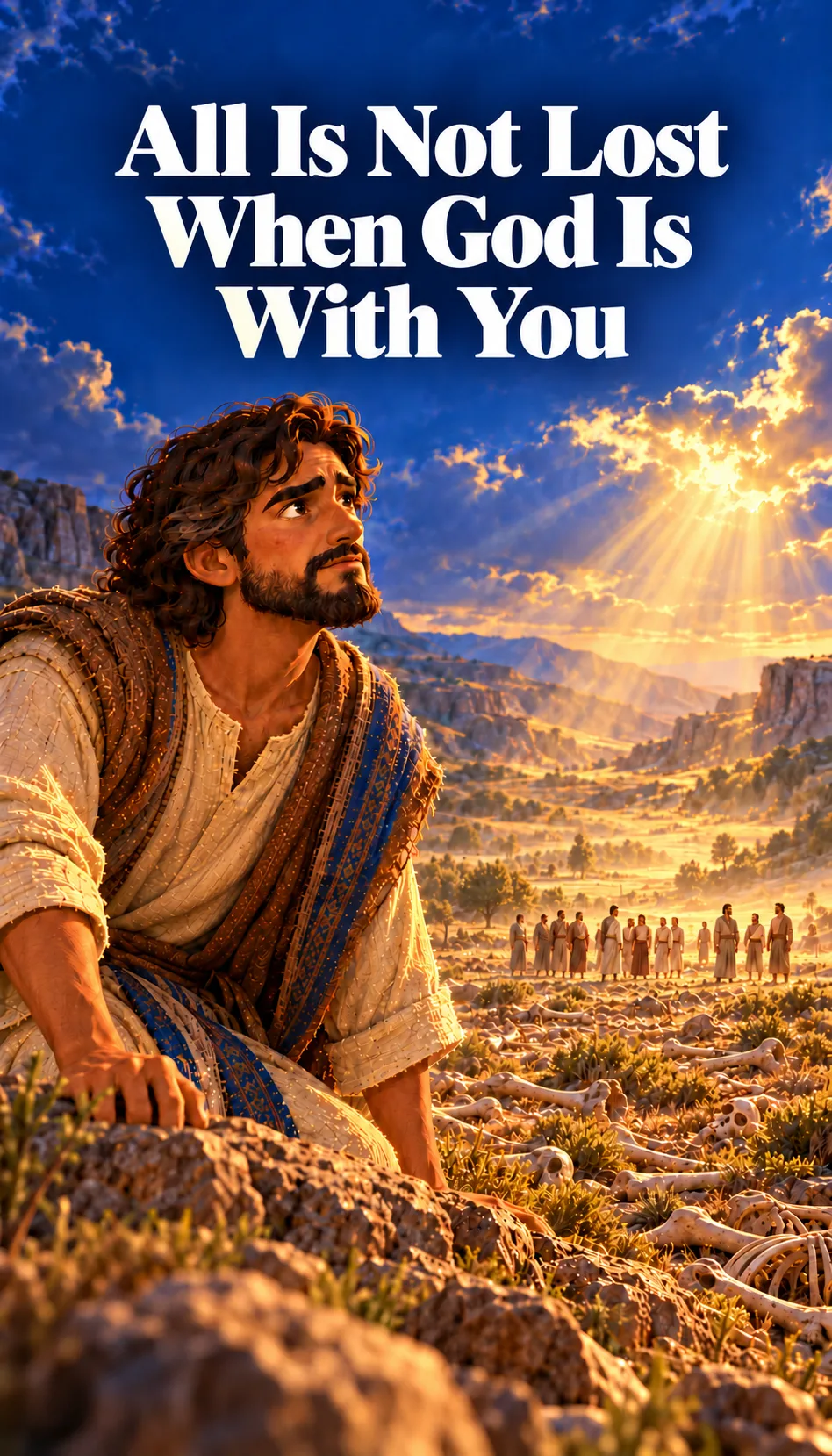
God called Ezekiel while he lived among the exiles by the Chebar River. His story encourages us to listen to and share God's word even in difficult times.
EzekielGod's CallBabylonian ExileFaith in Difficult Times
Have you ever thought that difficulties might prevent you from serving God? Thestory of Ezekiel in the Biblereminds us that the Lord can call His servants even when circumstances are tough.
Ezekiel was a priest and prophet of the Old Testament who received God's call while living among the Israelites deported to Babylon. He was far from Jerusalem, but God revealed Himself to him and gave him a mission: to proclaim His word, even though many people did not want to listen.
His story leaves us with a lesson:difficult circumstances do not limit God's power.
Let us learn who Ezekiel was, how he received his call, and what we can learn from his obedience for our lives and our families.
Who was Ezekiel in the Bible?
Ezekiel was a priest and prophet who lived during the exile of the people of Judah in Babylon,approximately in the 6th century BC.
His story appears in the book of Ezekiel, one of the prophetic books of the Old Testament.
The Bible provides us with some important information:
Name:Ezekiel, which means "God strengthens.
Father:Buzi (Ezekiel 1:3).
Occupation:Priest and prophet.
Place of his calling:By the Kebar River, in Babylon.
Time period:During the Babylonian exile.
Mission:To communicate God's word to the people of Israel.
To understand his story, we must remember that many inhabitants of Judah had been taken captive to Babylon due to the invasions of this empire.
The exile was a difficult period for the people: they had lost their freedom and many lived far from their land.
However, God had not stopped speaking to them.
It was in this context that Ezekiel received an extraordinary calling.
Biblical reference: Ezekiel 1:1-3.
The story of Ezekiel: God called him away from his home
1. Ezekiel lived among the exiles in Babylon
The story begins when Ezekiel was by the Kebar River, among the people who had been taken into exile.
Jerusalem was the religious center of Judah, but Ezekiel was far from that city.
It is important to understand that the Bible describes the difficult historical circumstances of the exile, butit does not specifically state that Ezekiel was feeling sadness or personal pain at the time of his calling..
What we do know is that his ministry began during a complicated period for his people.
And precisely there something extraordinary happened.
God manifested Himself to Ezekiel.
This reminds us that the Lord is not limited by a place. We can seek Him and trust in Him even when our life goes through unexpected changes.
Reference: Ezekiel 1:1-3.
2. Ezekiel received a vision of the glory of God
While he was by the Kebar River, Ezekiel beheld an impressive vision.
The first chapter of his book describes a stormy wind, a great cloud, shining fire, living creatures, and wheels of extraordinary appearance.
It also describes a figure resembling a throne.
Ezekiel understood that he was beholding a manifestation of the glory of the Lord and fell on his face.
The vision showed the greatness and majesty of God.
But there was a special detail:God manifested Himself to Ezekiel outside Jerusalem, in the land of exile..
Although the people were far from their home, the Lord remained sovereign.
This part of the story teaches us that the presence of God does not depend on everything going as we expect.
Reference: Ezekiel 1:4-28.
3. God told Ezekiel to stand up
After that vision, Ezekiel heard the voice of God.
In Ezekiel 2:1, the Lord commanded him to stand up because He wanted to speak with him.
The next verse explains that the Spirit entered Ezekiel and set him on his feet while God spoke to him.
This event marked the beginning of his prophetic mission.
Ezekiel did not simply receive an extraordinary vision: he also received a responsibility.
He had to listen carefully and communicate God's message.
Here we find a beautiful application for our Christian life:
When we face difficult responsibilities, we can seek strength from God to obey Him.
This does not mean that all our problems will disappear, but that we can depend on Him in the midst of them.
Reference: Ezekiel 2:1-2.
4. God gave him a difficult mission
The Lord sent Ezekiel to speak to the Israelites, a people who had repeatedly disobeyed His commandments.
God warned him that many people would be rebellious and would not want to listen.
However, Ezekiel had to faithfully communicate His words.
His mission was not to please everyone or gain popularity.
It consisted of obeying the Lord.
Later, God presented him as awatchman, a sentinel responsible for conveying warnings to the people (Ezekiel 3:17).
This responsibility teaches us that doing what is right does not always mean receiving the approval of others.
A child can decide to tell the truth even if their peers mock them. A teenager can reject bad behavior even if their friends think differently.
Obedience to God is valuable even when others do not recognize it.
Reference: Ezekiel 2:3-7.
Most important moments in Ezekiel's life
These events summarize his story and help understand his ministry:
His life during exile:Ezekiel lived among the exiles in Babylon (Ezekiel 1:1-3).
The vision of God's glory:He received an extraordinary manifestation by the Kebar River (Ezekiel 1:4-28).
His calling as a prophet:God raised him up and commissioned him to announce His word (Ezekiel 2:1-7).
His responsibility as a watchman:He was to faithfully warn the people (Ezekiel 3:17).
His challenges and messages of hope:He experienced the death of his wife and announced promises of restoration for Israel (Ezekiel 24:15-27; 36–37).
His story shows both the responsibility of communicating God's word and the hope the Lord offered to His people.
What can we learn from Ezekiel?
1. God can work in difficult circumstances
Ezekiel received his calling during exile, far from Jerusalem.
The situation of his people was complicated, but that did not prevent God from manifesting Himself.
Teaching:We do not need to wait for everything to be perfect to seek the Lord.
When we face changes, worries, or family difficulties, we can approach Him through prayer and reading His word.
2. Obeying God is more important than pleasing everyone
God warned Ezekiel that many people would not listen.
Even so, he had to deliver His message.
Teaching:Our faithfulness should not depend on applause or the opinions of others.
We can teach our children to be honest, respectful, and responsible, even if doing the right thing is not always popular.
3. We must first listen to the word of God
Before sending Ezekiel, the Lord spoke to him and explained his mission.
The prophet had to communicate the words he had received, not invent his own message.
Teaching:To share the Bible correctly, we first need to know it.
As parents and teachers, we must read the passages carefully and distinguish what Scripture says from our personal applications.
4. God calls us to act responsibly
Ezekiel's mission required faithfulness and perseverance.
Although he could not control the people's response, he had to fulfill the responsibility God had given him.
Teaching:We must do our part with love and responsibility, leaving the results in the Lord's hands.
5. Hope is in the power of God
Later, God announced through Ezekiel that He would restore His people.
The vision of the dry bones in Ezekiel 37 represents the restoration of Israel, which was without hope during the exile.
Teaching:Although we face difficult situations, we can trust in God's faithfulness.
The challenges Ezekiel faced
The Bible does not present a clear list of Ezekiel's personal mistakes. Therefore, it is more faithful to the text to recognize the challenges he faced.
Living in exile:His ministry began far from Jerusalem, among a deported community.
Speaking to rebellious people:God warned him that he would encounter resistance when delivering his words.
Fulfilling a demanding mission:His prophetic responsibility included conveying messages of warning.
Facing a personal loss:Ezekiel 24:15-27 recounts the death of his wife in the context of a prophetic sign. This event should not be confused with the initial moment of his calling.
These challenges show that serving God does not mean living without difficulties.
How can we apply Ezekiel's story today?
For children: doing what is right
When other peers do something wrong, remember that you can choose to act differently.
Activity:During this week, demonstrate honesty in a situation at school or at home.
For teenagers: maintaining their convictions
Ezekiel had to fulfill his mission, even if others did not want to listen.
Activity:Think of a situation where you felt pressure to do something wrong and reflect on how to respond according to biblical principles.
For parents: teach with perseverance
Raising our children in faith requires patience, consistency, and a good example.
Activity:Set aside ten minutes to read Ezekiel 2:1-7 as a family and talk about obedience.
For teachers and children's leaders: teach with faithfulness
Ezekiel's responsibility reminds us of the importance of correctly sharing God's word.
Activity:Teach about his calling through a Bible reading and ask the children how they can show courage to do good.
For the whole family: trust during difficulties
When changes or worries come, remember that God is not limited by circumstances.
Activity:Take a moment to share your concerns and pray together.
Ezekiel explained for children
Ezekiel was a priest who lived many years ago.
One day, he and many other people from his town were far from Jerusalem, in Babylon.
But God had not forgotten them.
While Ezekiel was by the Kebar River, he received an impressive vision of God's glory.
Then the Lord told him to stand up because He wanted to speak with him.
God had a mission for Ezekiel!
He had to communicate His words, even though some people would not want to listen.
What do we learn?
That we can hear God through the Bible, obey Him, and trust Him even when we go through difficult times.
If you have a problem at school, are worried about a situation, or need to make a decision, you can talk to God in prayer.
Remember: God can give you strength to do what is right.
Important verses related to Ezekiel
Ezekiel 1:3 — God speaks during exile.
The word of the Lord came to Ezekiel by the Kebar River. It reminds us that God can work in unexpected places.
Ezekiel 2:1-2 — God calls and raises up.
The Lord commanded Ezekiel to stand up and the Spirit lifted him. It teaches us to depend on God.
Ezekiel 2:7 — Faithfulness to the message.
Ezekiel had to communicate God's words even if people resisted. It reminds us of the importance of obedience.
Ezekiel 3:17 — The responsibility of the watchman.
God entrusted Ezekiel to warn the people. It teaches us to faithfully assume our responsibilities.
Ezekiel 36:26 — A new heart.
God promised to transform His people. It reminds us that true spiritual renewal comes from Him.
Questions for family discussion
Who was Ezekiel and where did he live when God called him?
What vision did he receive by the Kebar River?
What did God ask him to do?
Why was his mission difficult?
How can we obey God when others do not want to do what is right?
Invite each family member to share a concrete action they can practice during the week.
A teaching to remember
Difficulties do not limit the power of God.
Closing Prayer
Beloved Heavenly Father:
Thank you because your word reminds us that you are present even in difficult times.
Just as you called Ezekiel during the exile, help us to hear your word and obey you.
Give us strength when we face problems, courage to do what is right, and love to share your truth with others.
Bless our families and teach us to always trust in you.
In Jesus' name.
Amen.
Conclusion: God remains faithful
The story of Ezekiel presents us with a man who received an extraordinary mission during the exile in Babylon.
God revealed Himself to him, raised him up, and entrusted him with communicating His word to a people who needed to hear it.
Although his mission would be difficult, he had to remain faithful to the Lord.
His story reminds us thatadverse circumstances do not mean that God has stopped working..
If you are going through a difficult time today, draw near to God through prayer and the Scriptures.
AtPequeños del Reinowe want to help you discover these teachings and share them with your children.
Keep learning about the characters of the Bible and discover how their stories can strengthen the faith of your entire family.
Frequently Asked Questions about Ezekiel
Who was Ezekiel in the Bible?
Ezekiel was a priest and prophet of the Old Testament, son of Buzi. He lived during the Babylonian exile and received God's call by the Chebar River. His mission was to convey the word of the Lord to the Israelites, including warnings and messages of restoration.
Where was Ezekiel when God called him?
Ezekiel was among the exiles in Babylon, by the Chebar River. According to Ezekiel 1:1-3, there he received a vision of the glory of God. This event shows that the Lord could manifest Himself to His people even far from Jerusalem.
What mission did God give to Ezekiel?
God called Ezekiel to communicate His word to the Israelites, even though many were rebellious and resisted listening. His responsibility was to faithfully transmit the message he received. Later, he was also presented as a watchman tasked with warning the people.
What is the main teaching of Ezekiel?
A fundamental teaching is that God remains sovereign even in difficult circumstances. Ezekiel's call occurred during the exile and his mission required faithfulness. His story encourages us to listen to God's word, obey it, and trust in Him.
How to explain the story of Ezekiel to children?
We can explain that Ezekiel was a man whom God called while he was living far from his land. The Lord asked him to communicate His word, even though some did not want to listen. The lesson for children is to obey God and do what is right with courage.