
Ezekiel in the Bible: the prophet God called to watch over others
11 min read
God called Ezekiel to warn Israel as a watchman. His mission teaches us to care for others with truth, humility, and love.
Read storyEzekiel, exiled by the Kebar River, saw the likeness of the glory of God and fell face down on the ground. His encounter encourages us to seek God and…
Explore more biblical characters or continue with a related Bible class.
Meet more Bible characters and discover what their stories teach us.
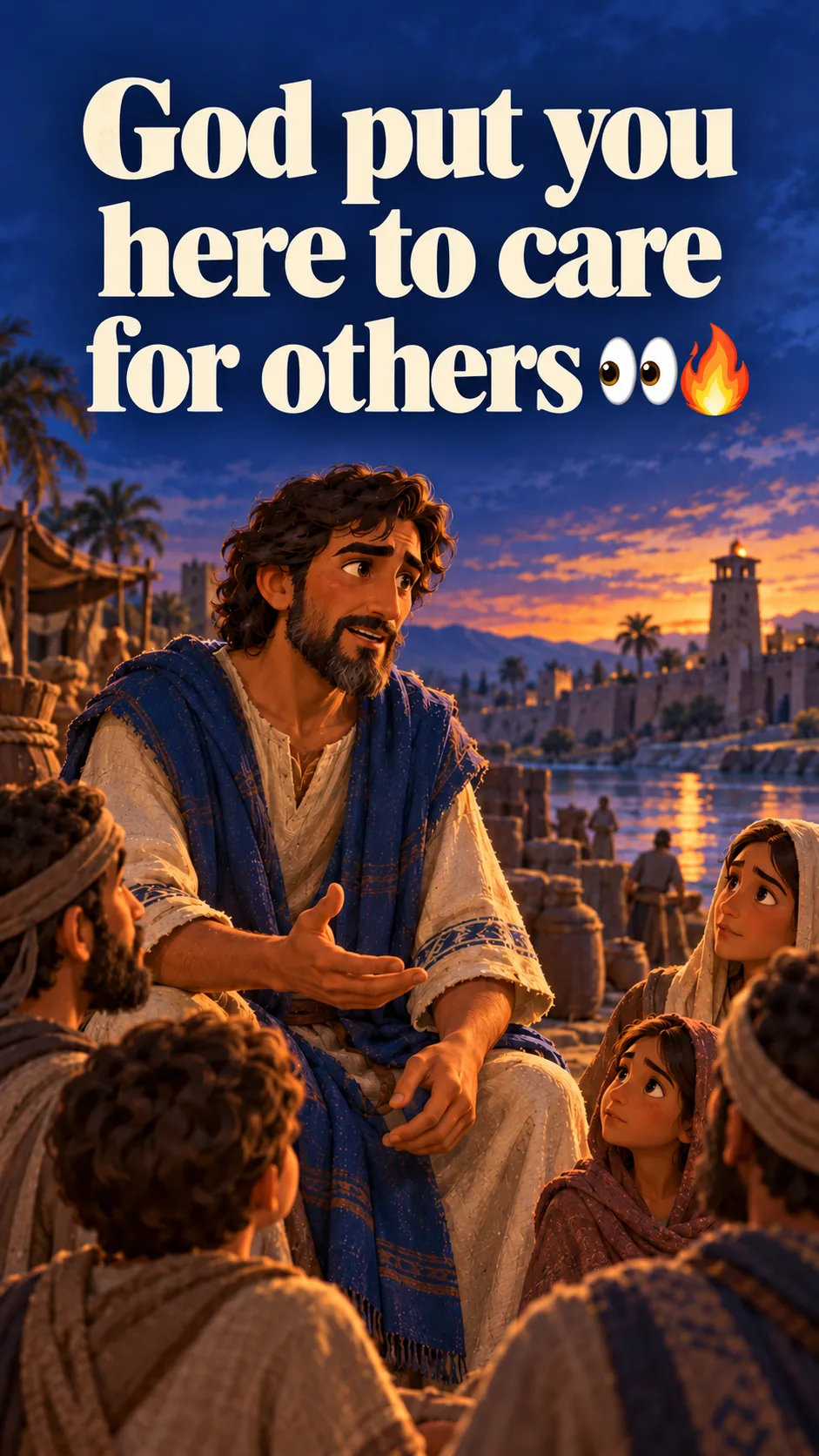
11 min read
God called Ezekiel to warn Israel as a watchman. His mission teaches us to care for others with truth, humility, and love.
Read story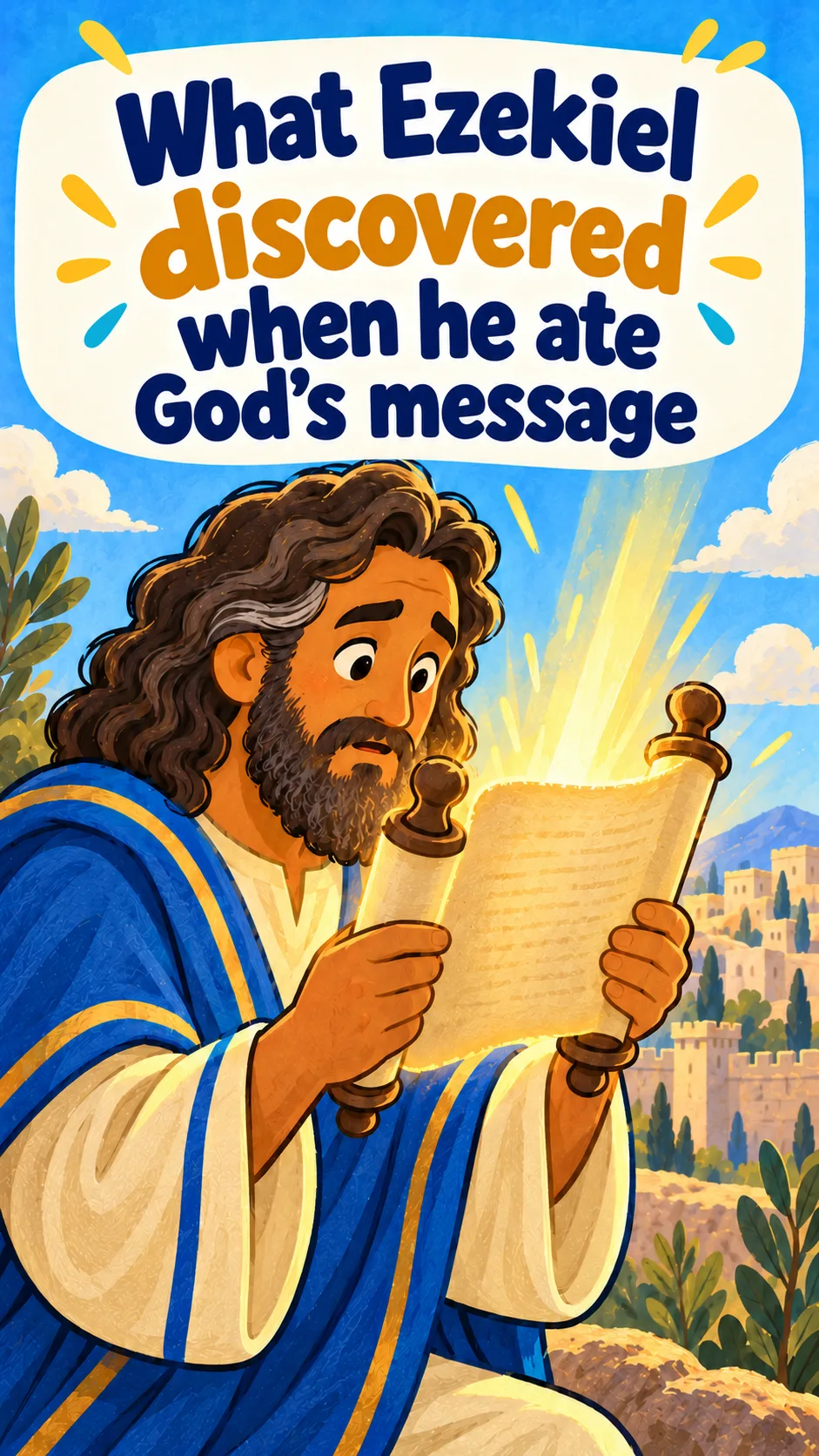
22 min read
God asked Ezekiel to eat a scroll before speaking to Israel. Discover why it was sweet as honey and how to receive His Word as a family.
Read story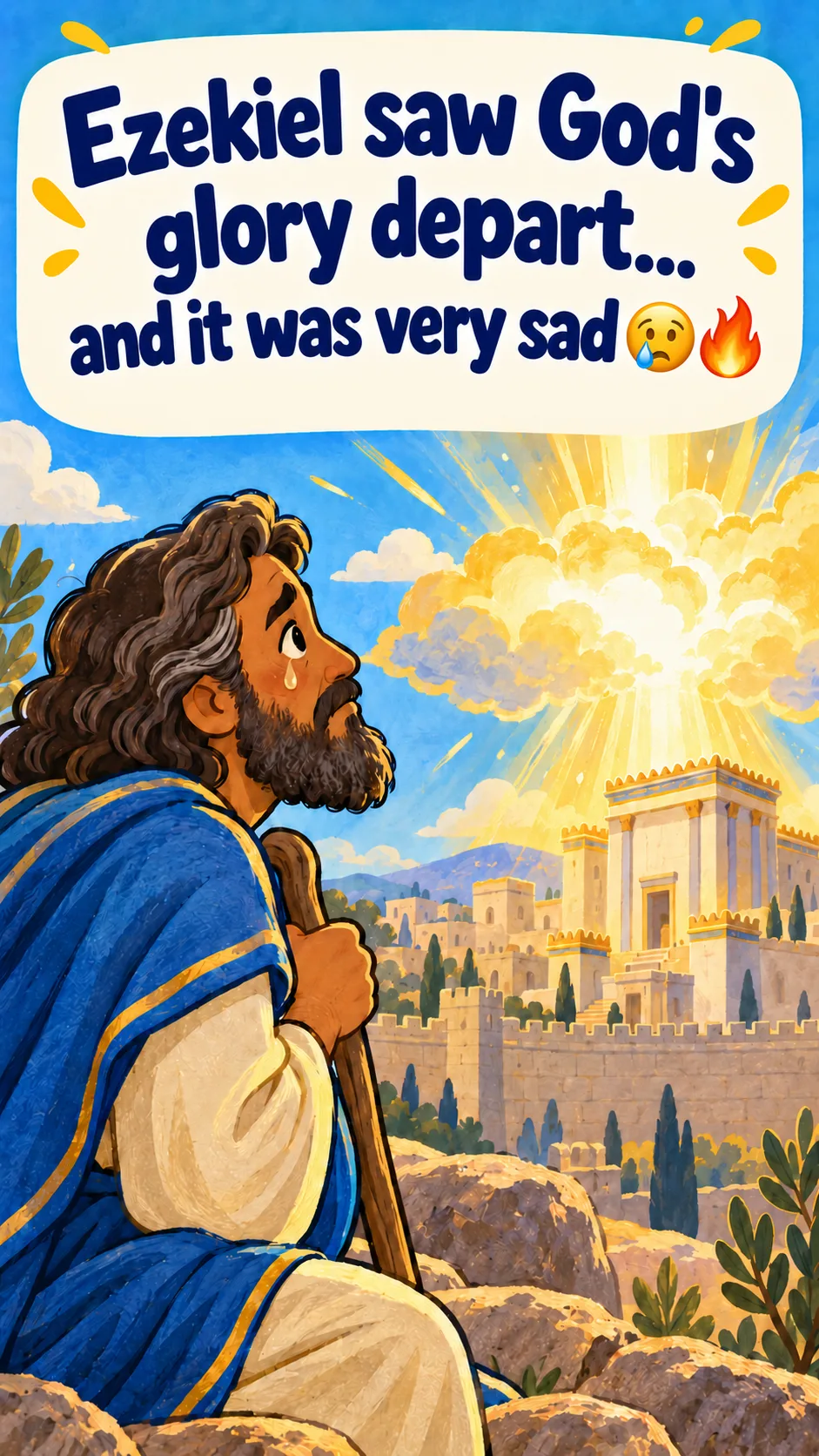
17 min read
Ezekiel saw in a vision the glory of God departing from the temple. His story invites us to return to the Lord with a sincere heart and reminds us of His promise of restoration.
Read story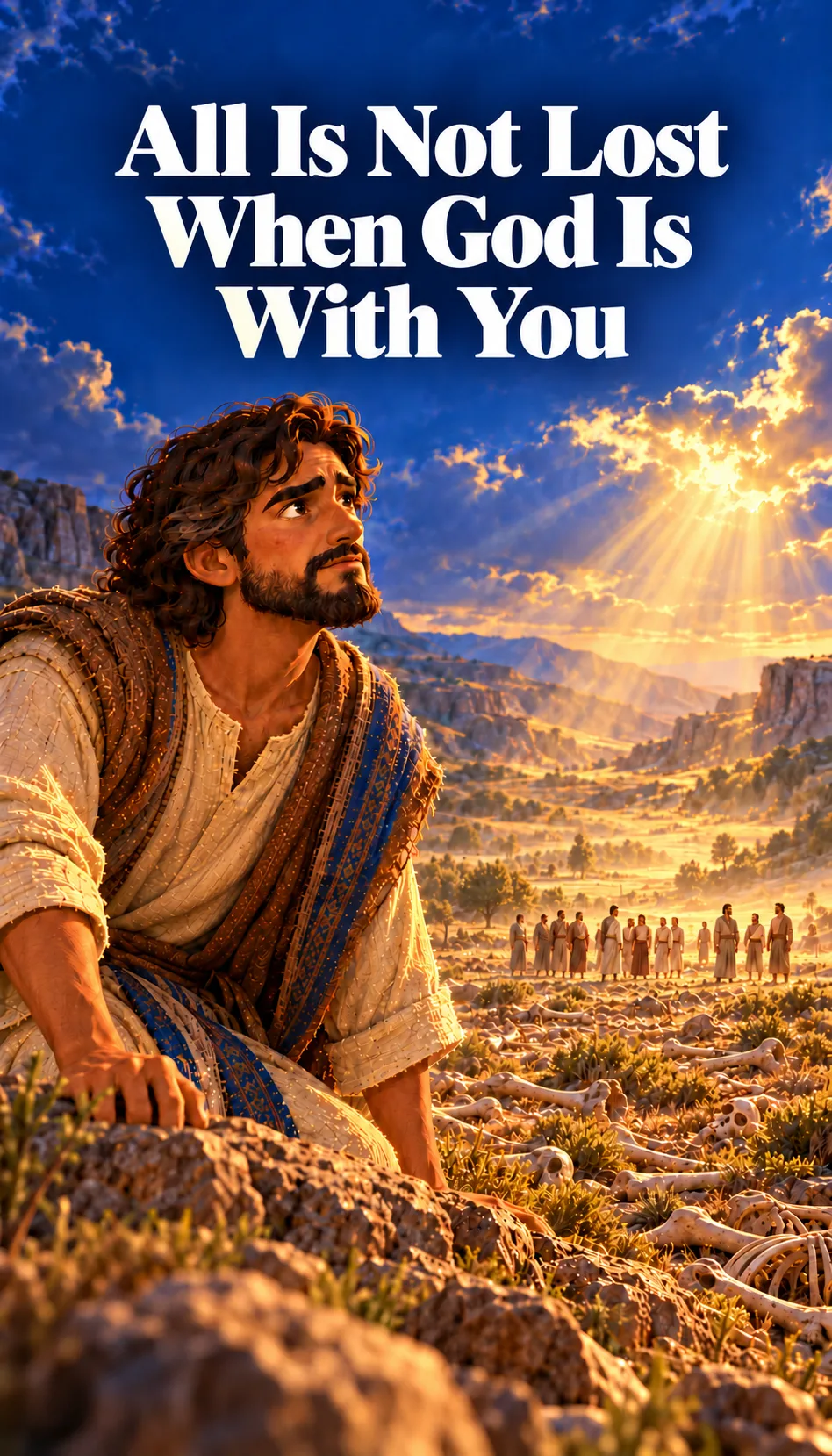
7 min read
In the vision of the valley of dry bones, God showed Ezekiel His promise to restore Israel. A story to discuss with family about hope and trust in His word.
Read story
9 min read
Ezekiel saw in a vision a river flowing from the temple that brought life wherever it went. This passage invites us to trust in God's restorative power.
Read story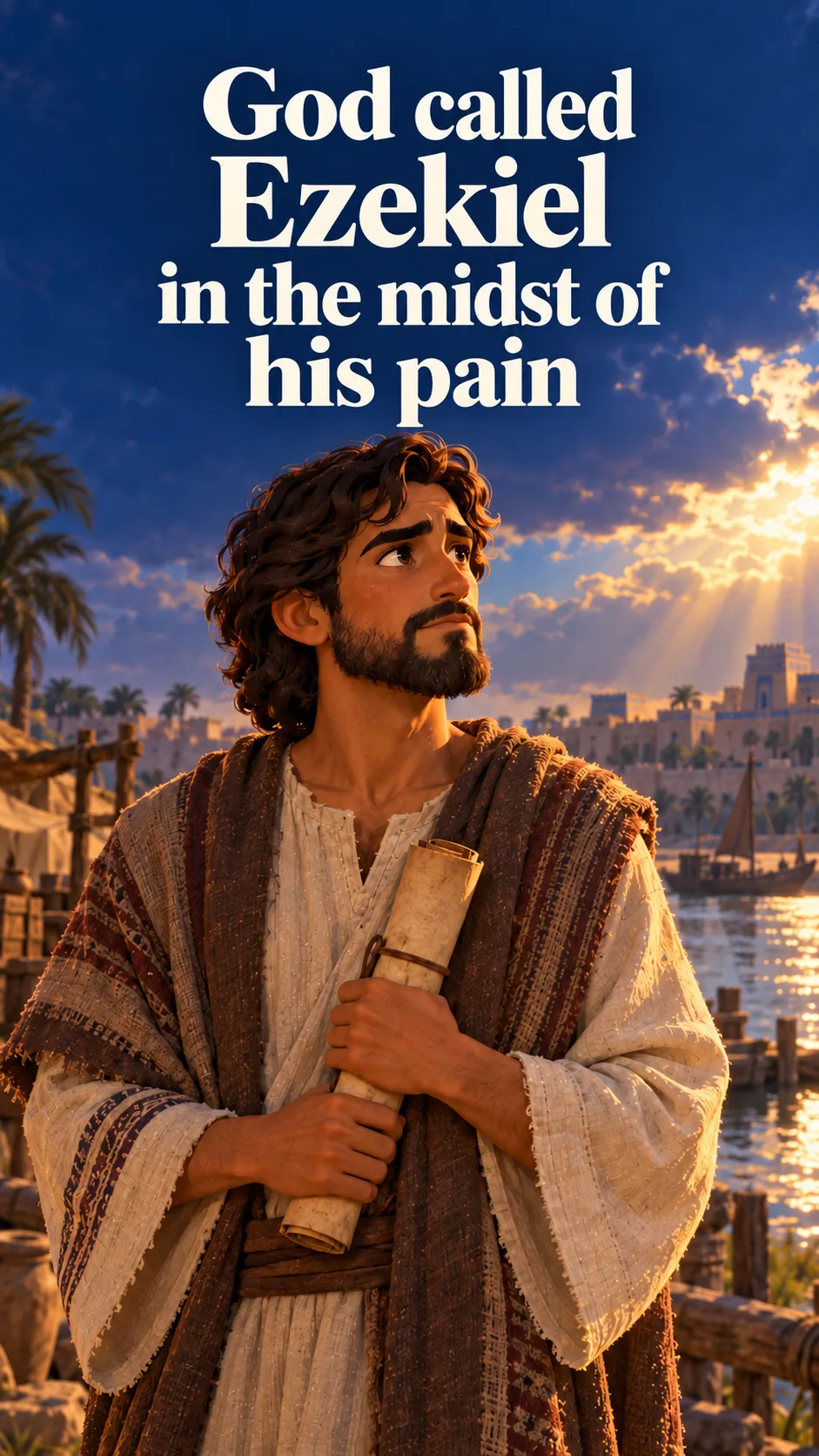
14 min read
God called Ezekiel while he lived among the exiles by the Chebar River. His story encourages us to listen to and share God's word even in difficult times.
Read storyCan you imagine looking up to the sky and witnessing such an impressive vision that you find no words to describe it? That is what happened to Ezekiel, a man who received an extraordinary message from God while living far from his land.
Ezekiel in the Biblewas a priest and prophet who lived during the exile of the people of Israel in Babylon. God called him to proclaim His word, warn about the consequences of sin, and convey hope to a people going through difficult times.
One of the most astonishing experiences of his life occurred by the Kebar River, when he saw the heavens open, living creatures, extraordinary wheels, and a throne surrounded by radiance. Before that manifestation of the glory of God, he fell face down on the ground.
His story teaches us thatGod remains sovereign even when our lives go through situations we do not understand. It also reminds us of the importance of listening to His word, obeying Him, and keeping our hope alive.
Ezekiel was one of the great prophets of the Old Testament. His name is often interpreted as "God strengthens" or "God will strengthen.
The Bible presents some important facts about his life:
Name:Ezekiel.
Father:Buzi.
Occupation:Priest and prophet of God.
Era:6th century BC.
Place where he exercised his ministry:Babylon, among the exiled Jews.
Biblical book:Ezekiel, in the Old Testament.
Main mission:To communicate the word of God, call the people to repentance, and announce their future restoration.
According to Ezekiel 1:1-3, he received a vision from God during the fifth year of King Jehoiachin's exile, approximately in 593 BC.
At that time, many inhabitants of Judah had been taken captive to Babylon. They were far from Jerusalem, from their homes, and from the temple where they used to worship God.
However, something wonderful happened:God manifested Himself to Ezekiel precisely in that foreign land.
From that moment, his life was marked by a difficult mission, but one deeply important for the people of Israel.
The story of Ezekiel begins in a setting of exile, uncertainty, and great changes for God's people.
Biblical reference: Ezekiel 1:1-3
Ezekiel was among the Jews exiled in Babylon, by the Chebar River.
Jerusalem was far away. Many Israelites had lost the freedom to live in their land and faced the consequences of the decisions they had made as a nation.
But being far from Jerusalem did not mean being beyond God's reach.
It was precisely there, among the exiles, that Ezekiel received an extraordinary manifestation.
The heavens opened and a vision began that would change his life.
Biblical reference: Ezekiel 1:4-14
Ezekiel saw that from the north came a stormy wind accompanied by a great cloud, fire, and an extraordinary brightness.
In the midst of that scene appeared four living creatures.
Each had four faces and four wings. Their faces resembled a man, a lion, an ox, and an eagle.
The description was so extraordinary that Ezekiel constantly resorted to comparisons to express what he was witnessing.
Later, in Ezekiel 10:20, the prophet identified those beings as cherubim.
It was not an ordinary scene, but a vision of the glory and majesty of God.
Biblical reference: Ezekiel 1:15-21
The vision continued.
Beside the living creatures were wheels of surprising appearance, described as if one wheel was within another.
Their rims were tall and full of eyes all around.
The most extraordinary thing was their movement.
When the living creatures moved forward, the wheels also moved forward. When they stopped, the wheels stopped.
Everything moved in a coordinated way.
The account shows a vision full of movement, grandeur, and mystery. Although there are different interpretations about the symbolism of its details, the main message points to the majesty and governance of God.
No human circumstance can take away God's authority.
Biblical reference: Ezekiel 1:22-28
Then Ezekiel saw something even more impressive.
Above the living creatures was an expanse like a marvelous crystal.
Upon that expanse appeared the figure of a throne, resembling sapphire stone.
And on the throne was a likeness of a human figure surrounded by fire and brightness.
The light was so extraordinary that Ezekiel compared it to the rainbow that appears among the clouds after the rain.
The prophet understood that he was beholding a vision of the likeness of the glory of the Lord.
His reaction was immediate.
Ezekiel fell face down to the ground.
He did not try to approach out of curiosity nor act as if he were before something ordinary. He prostrated himself before that manifestation of divine majesty.
At that moment he also heard a voice speaking to him.
The experience reminds us that the presence of God deserves reverence, humility, and worship.
Biblical reference: Ezekiel 2:1–3:3
After that vision, God began to speak to Ezekiel about his mission.
He had to address the Israelites and deliver the message that God would give him.
It would not be an easy task.
The Lord warned him that he would encounter rebellious people who might not want to listen to him.
However, Ezekiel had to remain faithful to the message he received.
In another part of this experience, God showed him a written scroll and commanded him to eat it. In the vision, the scroll tasted as sweet as honey in his mouth.
This was part of his preparation as a messenger of God.
Before speaking to the people, Ezekiel had to receive the word of the Lord.
This teaching continues to be valuable for those who wish to share the Bible with others.
Bible reference: Ezekiel 3:16-21
God also entrusted him with a special responsibility: to act as a watchman for the people of Israel.
In those times, a watchman kept vigil to warn of dangers.
Similarly, Ezekiel had to communicate divine warnings so that people would recognize their wrong ways and have the opportunity to repent.
His mission was not to please everyone.
He had to speak faithfully, even when the message was difficult to receive.
This teaches us that loving people also means telling the truth responsibly.
Bible reference: Ezekiel 37:1-14
Later, Ezekiel received another extraordinary vision.
God took him, in a vision, to a valley full of dry bones.
Those bones represented the situation of Israel: a people who felt hopeless and far from the life they had known.
God commanded him to prophesy over the bones.
Then they began to come together. Tendons, flesh, and skin appeared.
Finally, by the action of the Spirit of God, those bodies received life and stood up.
The passage itself explains that the vision announces the restoration of the people of Israel.
But it also reminds us of an important spiritual principle:God has the power to bring life and restoration where humans only see hopelessness..
Ezekiel's story did not end with warnings of judgment. His book also contains great promises of restoration and a vision of God's glory returning to the temple (Ezekiel 43:1-5).
These are seven fundamental events to understand his story:
He lived among the exiles in Babylon.Ezekiel was far from Jerusalem along with other Israelites. There he began his prophetic ministry. (Ezekiel 1:1-3).
He beheld a vision of the glory of God.He saw living creatures, extraordinary wheels, and a throne surrounded by radiance. He fell face down to the ground. (Ezekiel 1:4-28).
He received the call to be a prophet.God sent him to deliver His word to a people who often resisted listening. (Ezekiel 2:1-7).
He was appointed as a watchman over Israel.He received the responsibility to warn people about sin and its consequences. (Ezekiel 3:16-21).
He faced a painful family loss.The Bible recounts the death of his wife and how that experience was related to a prophetic message for the people. (Ezekiel 24:15-24).
He received the vision of the dry bones.God showed him, through a vision, His promise to restore Israel. (Ezekiel 37:1-14).
He beheld a vision of future restoration.The last chapters of his book present a vision of a temple and the return of the glory of the Lord. (Ezekiel 40–48).
Each of these moments helps us to better know the prophet and understand how God used his life to convey messages of holiness, responsibility, repentance, and hope.
The prophet's story contains profound teachings that can strengthen our relationship with God and help us grow spiritually as a family.
Ezekiel was not in Jerusalem when he received his first great vision.
He was in Babylon, among the exiles.
Even so, God manifested Himself and spoke to him.
This reminds us that the presence of the Lord is not limited to a building, a city, or a country.
Application for our life:
When a family moves to a new city, goes through a separation, starts over, or faces an unknown situation, they can remember that God remains trustworthy.
We can seek Him through prayer and His word, wherever we are.
When Ezekiel beheld the likeness of the glory of the Lord, he fell face down to the ground.
His reaction shows reverence before divine greatness.
The Bible teaches us that God is holy and deserves respect, worship, and obedience.
Application for our life:
We can teach our children that praying is not just about asking for things.
It is also an opportunity to give thanks, recognize who God is, and draw near to Him with a humble heart.
Ezekiel received the mission to speak to a people who could reject his words.
God did not promise him a positive response from everyone.
His responsibility was to faithfully communicate the received message.
Application for our life:
Sometimes, doing what is right means telling the truth, admitting a mistake, or rejecting something we know is wrong.
Our obedience to God should not depend solely on the approval of other people.
Before announcing His message, Ezekiel was ordered to eat a scroll that contained God's words.
This prophetic action reminds us of the importance of receiving and listening to the divine word before sharing it.
Application for our life:
Parents, teachers, and Christian leaders can dedicate time to studying the Bible and reflecting on its teachings.
It is not just about knowing stories, but about allowing the word of God to transform our decisions and attitudes.
In the vision of the dry bones, the Lord showed Ezekiel that Israel was not beyond His restorative power.
Although the people felt hopeless, God announced that He would act to restore them.
Application for our life:
When we go through difficulties, we can remember that the present situation does not limit God's power.
This does not mean that all our problems will disappear immediately or in the way we imagine.
It means that we can continue trusting in His faithfulness, seek His will, and keep our hope alive.
The Bible does not present a specific personal sin of Ezekiel as a central episode of his story. Therefore, instead of attributing errors to him that are not recorded, it is more faithful to the text to consider the challenges he faced.
Ezekiel had to carry out his ministry far from Jerusalem.
Exile represented a difficult situation for the Jewish people, but it did not prevent God from entrusting him with a mission.
Teaching:Difficult circumstances do not prevent us from seeking and serving God.
God warned the prophet that he would face resistance among the Israelites.
His mission required perseverance and faithfulness.
Teaching:We must stand firm in the truth without allowing rejection to lead us to abandon what is right.
Ezekiel 24:15-24 recounts that the prophet lost his wife.
God gave him specific instructions on how he should act publicly because his experience would be a prophetic sign for Israel.
It was a deeply serious and painful situation. The account should not be understood as a general rule about how people who lose a loved one should express their grief.
Teaching:The story shows that Ezekiel's service was also marked by suffering, not only by extraordinary experiences.
The prophet's life contains principles that we can put into practice in our homes, in the church, and in our daily activities.
When they are afraid, feel alone, or face an unknown situation, we can remind them how God spoke to Ezekiel far from his land.
Activity:Before going to sleep, each child can mention something that worries them and express it to God through a simple prayer.
Ezekiel first received the word of God before communicating it to the people.
Parents can also learn to listen and study the Bible to convey its teachings coherently.
Activity:Read Ezekiel 1:1-3 together and talk about how to seek God in times of change.
A move, a new school, a family problem, or an unexpected situation can create uncertainty.
The story of Ezekiel reminds us that we can continue seeking God even when our circumstances change.
Activity:Set aside a small weekly time to thank God for His care and share prayer requests.
Ezekiel's vision helps explain to children that God is glorious, holy, and worthy of worship.
Activity:Ask them to draw some elements described in Ezekiel 1 and explain that these are representations of a biblical vision, not a photograph of what God is like.
Ezekiel was called to warn the people about their decisions.
We can also learn to express the truth responsibly, without humiliating or harshly treating others.
Activity:Reflect as a family on a situation where it is necessary to speak the truth with respect and love.
Ezekiel was a man from the Bible who loved and served God.
He lived far from his land, in a place called Babylon, along with many other people from his nation.
One day, while near the Kebar River, God showed him an amazing vision.
Ezekiel saw a great cloud, bright fire, living creatures with wings, and some very special wheels.
Above everything was a throne surrounded by a wonderful light.
It was a vision of the glory of God.
Ezekiel was so impressed that he fell face down to the ground.
Then, God spoke to him and gave him a mission: he had to share His word with the Israelites.
Even though many people did not want to listen, he had to remain faithful.
What can we learn?
That God is not limited to one place and that we can trust Him when we are afraid or when our life changes.
We also learn to listen to Him, respect Him, and obey His word.
Remember:even though Ezekiel was far from home, God was able to speak to him there.
Ezekiel 1:1-3 — The heavens opened.
This passage presents the prophet among the exiles, by the Kebar River, where he received his first visions of God.
Ezekiel 1:26-28 — The vision of the glory of God.
It describes the figure of a throne and the extraordinary radiance that led Ezekiel to prostrate himself face down.
Ezekiel 2:1-7 — The prophet's calling.
God sent Ezekiel to communicate His word to Israel, even in the face of possible rejection.
Ezekiel 3:17 — The watchman of Israel.
God entrusted him with the responsibility to warn the people about their ways.
Ezekiel 36:26 — The promise of a new heart.
God announced a profound transformation for His people, related to their spiritual restoration.
Ezekiel 37:1-14 — The vision of the dry bones.
It shows God's power and His promise to give new life and hope to the people of Israel.
After reading the story, parents, children, and teachers can use these questions to reflect together:
Where was Ezekiel when God showed him his first vision?
What extraordinary elements appeared when the heavens opened?
Why do you think Ezekiel fell face down when he beheld the glory of God?
What does this story teach us about God's presence when we are far from home?
Why was it important for Ezekiel to communicate the message he received, even though some people did not want to hear it?
What can we learn from the respect and reverence Ezekiel showed before God?
How can we seek God when we feel fear, sadness, or uncertainty?
What can we do this week to show that we trust God and desire to obey His word?
These questions can be used in family devotionals, Sunday school classes, or children's group meetings.
No matter where you are, God is still great and you can trust Him.
Beloved God, thank You because Your glory and power have no limits.
Just as You revealed Yourself to Ezekiel when he was far from his land, help us remember that we can seek You anywhere.
When we feel fear, sadness, or uncertainty, strengthen our faith.
Teach us to listen to your word, obey you with love, and recognize your greatness with humility.
Take care of our family and help us trust in you every day.
In the name of Jesus, amen.
Ezekiel in the Biblepresents us with the story of a man who received an extraordinary mission while living far from his land.
His vision of the open heavens, the living creatures, the wheels, and the radiant throne invites us to recognize the majesty and holiness of God.
But his story also teaches us that the Lord did not abandon his people in exile. Amid messages of warning and calls to repentance, God announced hope and restoration.
Ezekiel learned to communicate the divine word in difficult circumstances, even when others did not want to listen.
Today we can remember that our trust should not depend solely on the circumstances we see.
God remains sovereign, his word endures, and we can approach Him with faith and humility.
We invite you to continue discovering the stories of biblical characters inLittle Ones of the Kingdom, where children, parents, and families can learn together the teachings of the Bible and strengthen their relationship with God.
Ezekiel was a priest and prophet of the Old Testament, son of Buzi, who lived among the exiled Jews in Babylon during the 6th century BC. God called him to communicate His word to Israel, warn about sin, and announce the future restoration of His people. His story appears in the biblical book that bears his name.
According to Ezekiel 1, the prophet beheld a vision of the glory of God. He saw a cloud accompanied by fire and brightness, four living creatures, extraordinary wheels, and a figure resembling a throne. On the throne was a human-like appearance surrounded by light. Before that manifestation of divine majesty, Ezekiel fell face down to the ground.
Ezekiel fell face down when he beheld the likeness of the glory of the Lord, according to Ezekiel 1:28. His reaction expresses reverence and awe at encountering a manifestation of divine majesty. This event reminds us that God is holy and worthy of worship, respect, and humility.
The wheels appear in Ezekiel 1:15-21, alongside the four living creatures, and move in coordination with them. The text describes them with an extraordinary appearance and rims full of eyes. There are different Christian interpretations regarding their symbolic details. The fundamental point is that they are part of a vision that manifests the glory, power, and majesty of God.
One of the main teachings of Ezekiel is that God continues to be sovereign even amid difficult circumstances. The prophet received a divine vision while living in exile, far from Jerusalem. His story also teaches us the importance of listening to God's word, obeying His instructions, and maintaining hope in His promises.
Ezekiel lived among the Jewish exiles in Babylon, by the Chebar River, when he received his first great vision. According to Ezekiel 1:1-3, this occurred during the fifth year of King Jehoiachin's deportation. The place is significant because it shows that God could manifest Himself to His people even outside the land of Israel.
Ezekiel received a vision of a valley full of dry bones, narrated in Ezekiel 37:1-14. God commanded him to prophesy over them, and the bones came to life. The same passage explains that they represented the people of Israel, who felt hopeless. Through that vision, God announced that He would restore His people.
To teach the story of Ezekiel to children, it is advisable to start with his experience by the Chebar River, using simple words and visual elements. We can explain that God showed him His glory and gave him an important mission. Then, it is helpful to talk about trust, obedience, and reverence, emphasizing that we can seek God anywhere.